Patterns of Market Segmentation
Market segments can be built up in many ways. One common method is to identify preference segments. Suppose ice cream buyers are asked how much they value sweetness and creaminess as two product attributes. Three different patterns can emerge:
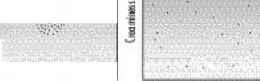
^ Homogeneous preferences: Figure 3-6 shows a market in which all of the consumers have roughly the same preference, so there are no natural segments. We predict that existing brands would be similar and cluster around the middle of the scale in both sweetness and creaminess.
^ Diffused preferences: At the other extreme, consumer preferences may be scattered throughout the space (Figure 3-6), indicating great variance in consumer preferences. One brand might position in the center to appeal to the most people; if several brands are in the market, they are likely to position throughout the space and show real differences to reflect consumer-preference differences.
^ Clustered preferences: The market might reveal distinct preference clusters, called natural market segments (Figure 3-6). The first firm in this market might position in the center to appeal to all groups, choose the largest market segment (concentrated marketing), or develop several brands for different segments. If the first firm has only one brand, competitors would enter and introduce brands in the other segments.
Smart marketers examine such segmentation patterns carefully to better understand the various positions they might take in a market—and the competitive implications.
XfrrrtgäAHUf
(H DirFufed iiteiHi
--•-- '• I ill ím'i Vi ii Mi i Ii i i «ï ■'
Figure 3-6 Basic Market-Preference Patterns
--•-- '• I ill ím'i Vi ii Mi i Ii i i «ï ■'
V ■:vi ■ :1 í i v ^ ¡; i --; :j
i'iifpiil- Wití.hfcj
Figure 3-6 Basic Market-Preference Patterns
Continue reading here: Multi Attribute Segmentation Geoclustering
Was this article helpful?
Readers' Questions
-
Aamu8 months ago
- Reply